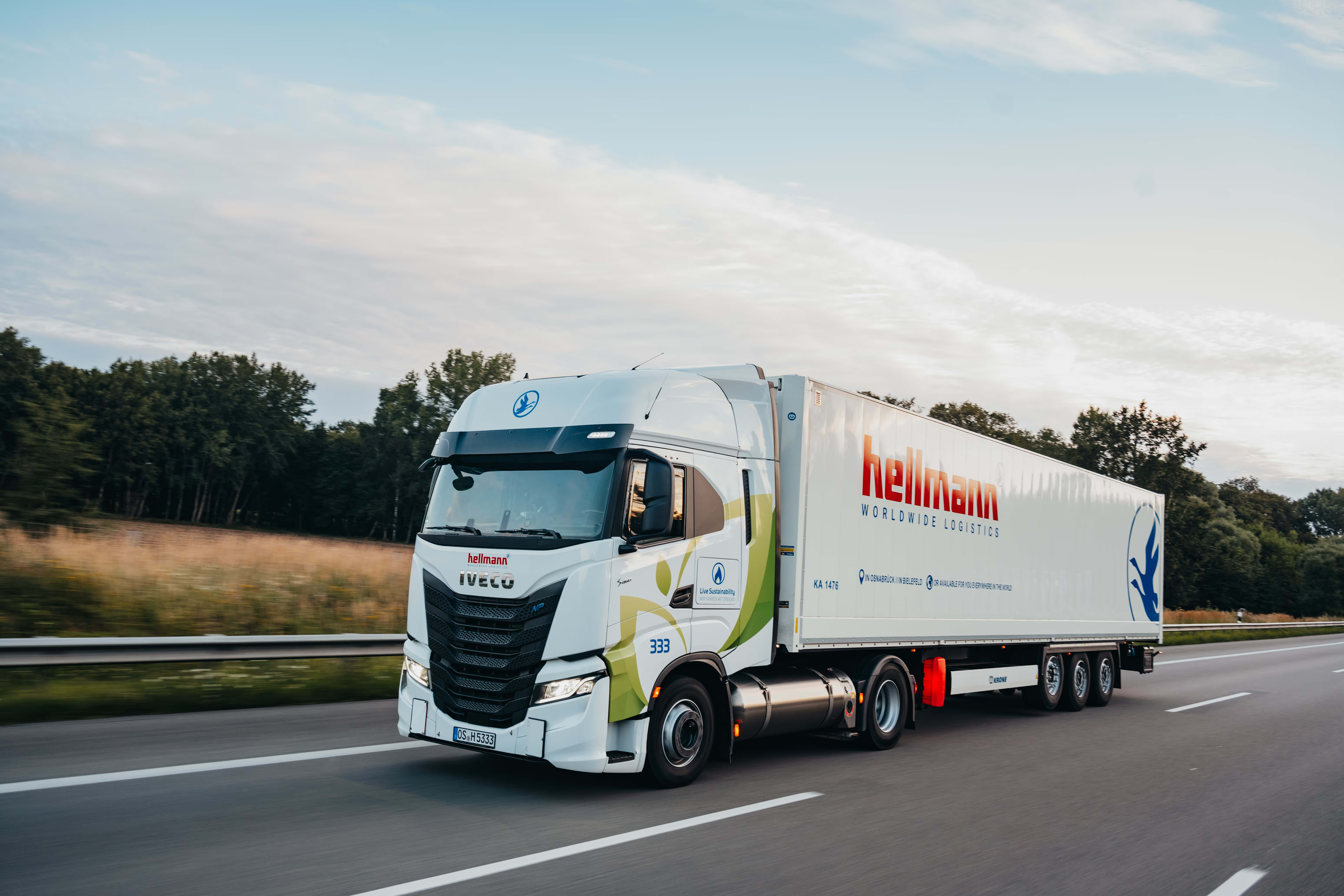

How Pflaum Evolved From Transport Transparency to a Complete Corporate Carbon Footprint
Building on its earlier work with shipzero to achieve full transparency into transport emissions, Pflaum has completed its first Corporate Carbon Footprint (CCF), extending emissions accounting across the entire company. Rather than waiting for regulation to force the issue, Pflaum used the data foundation already built for transport emissions as the launchpad for a company-wide footprint spanning twelve GHG Protocol categories.
Summary
Pflaum partnered with shipzero to extend its existing transport emissions tracking into a full Corporate Carbon Footprint, consolidating previously scattered data from across all branches, warehouses, and facilities into a single, structured reporting process.
Pflaum used shipzero to:
- Build a complete Corporate Carbon Footprint across Scope 1, 2, and 3 emissions, extending beyond transport to the entire company
- Centralize previously decentralized data (energy consumption, waste, capital goods, and more) from across all branches, warehouses, and even driver accommodations
- Reduce data collection time for the CCF by roughly 50% between the first and second reporting cycles
- Use granular emissions insight to help evaluate fleet electrification and alternative fuel investments
- Prepare early for upcoming regulatory disclosure requirements with a CSRD-aligned reporting output
- Set and track progress toward a clear target: 75% of logistics operations powered by renewable energy by 2030
.jpg)

Pflaum needed to extend its existing transport emissions transparency into a complete, company-wide Corporate Carbon Footprint, but the required data was scattered across branches, warehouses, and facilities with no shared structure to bring it together.

shipzero extended its existing transport emissions platform into a full Corporate Carbon Footprint, consolidating data across twelve GHG Protocol categories from Pflaum's telematics, ERP, and invoicing systems into one structured reporting process.
Challenge: Turning scattered company data into one footprint
Following the success of achieving transport emissions transparency with shipzero, Pflaum's management set an ambitious next goal: a complete Corporate Carbon Footprint covering the entire company, not just transport. Since transport already accounted for more than 90% of Pflaum's total emissions, extending the scope to the rest of the company was a natural next step, and one Pflaum wanted to tackle early, ahead of anticipated regulatory reporting obligations.
Before working with shipzero, Pflaum had never compiled a full company-wide footprint. The necessary data (energy invoices, vehicle and equipment records, purchasing data, etc.) existed somewhere across the organization. But it was scattered across departments, each with its own records and formats, and no shared structure to bring them together.
"We knew the data existed inside the company; we just didn't always know where to find it. Building a clear overview of every location and every type of consumption was by far the biggest part of the work, more than the emissions calculation itself."
Matthias Hummel, Controller, Pflaum
Solution: Building on an existing foundation of trust
Because shipzero already calculated Pflaum's transport emissions, extending the partnership to the full CCF was a straightforward decision. The relationship already had a successful track record. shipzero's team combined logistics-specific expertise with hands-on guidance for a topic that was completely new to Pflaum's controlling team.
Together with shipzero's CCF experts, Pflaum built a structured inventory of every branch, warehouse, and facility, mapping energy, waste, refrigerant, and purchasing data across twelve GHG Protocol categories – drawing on telematics systems, energy suppliers, ERP exports, and invoicing records. Where standard templates didn't fit Pflaum's existing systems, shipzero adapted its data collection approach to Pflaum's own formats rather than the other way around. Cross-departmental collaboration from quality management to fleet operations also helped surface data that was already being collected for other certifications.
Once the initial structure was in place, the effort required for subsequent reporting cycles dropped substantially: data collection time fell by roughly 50% between Pflaum's first CCF (covering FY2024) and its second (FY2025). This was a result of shipzero's standardized data collection process and templates, which gave Pflaum's team a repeatable structure to follow rather than starting from scratch each year. The remaining time is now driven almost entirely by external factors outside shipzero's or Pflaum's control – utility invoices and annual financial statements that are only finalized months after the reporting period ends.
The process also became an opportunity to modernize internal workflows: Pflaum consolidated electricity tariffs across multiple locations onto shared contracts and began tagging invoices by emissions category at the point of digital capture, reducing manual work for future reporting cycles.
"We started this project completely from zero. It took time just to understand what counted toward each category. Having shipzero's team available for regular working sessions made all the difference."
Matthias Hummel, Controller, Pflaum
Results: A complete footprint – and a decision-making tool
Pflaum's first full Corporate Carbon Footprint came to 150,852 tCO₂e for FY2024, with transport activities (Scope 1 combustion) accounting for roughly 93% of total emissions, matching Pflaum's own expectations based on prior internal estimates. Scope 2 (electricity) contributed less than 1%, with the remaining Scope 3 categories including purchased goods, capital goods, and waste making up the balance.
Some categories typical of manufacturing companies, such as upstream and downstream value chain emissions, don't apply to Pflaum as a transport and logistics service provider and were excluded. For categories with limited materiality such as employee commuting across a workforce of more than 1,000 drivers, Pflaum and shipzero agreed on a pragmatic, proportionate methodology rather than pursuing exhaustive precision for a category contributing a fraction of a percent to the total footprint.
Beyond the headline figures, the process gave Pflaum a level of granularity it hadn't had before, down to emission factors for individual categories of purchased goods. It also provided Pflaum's leadership a factual basis for evaluating fleet decisions already underway, including the shift toward Bio-CNG, Bio-LNG, and electric vehicles, with the upcoming FY2025 footprint set to show whether that shift is moving the numbers.
"Every vehicle decision we make now has real data behind it. We can see whether the shift toward alternative fuels is actually moving the numbers and making the case for it internally, even where the upfront cost is higher."
René Rippstein, Head of Controlling, Pflaum
Outlook: How the long-term partnership evolves beyond a standalone footprint
Pflaum's first case study with shipzero was headlined “Why Transparency of CO₂e Transport Emissions Is Just the Beginning” – a fitting title in hindsight. With its first Corporate Carbon Footprint now complete, Pflaum has mastered the next piece of the puzzle in that same journey.
That momentum comes with a clear target: by 2030, Pflaum aims to power 75% of its logistics operations with renewable energy, with the Corporate Carbon Footprint now in place to track progress toward it year over year.
Pflaum plans to publish its Corporate Carbon Footprint externally, extending the transparency it already offers customers on transport emissions to its full company footprint. While the CCF isn't yet linked to a formal target-setting framework such as SBTi, the CSRD-aligned reporting format built into shipzero's output means Pflaum is already prepared in case mandatory disclosure requirements arrive in the future.
Looking ahead, Pflaum and shipzero are exploring ways to move data entry directly onto the shipzero platform, giving branch and site managers direct access to enter consumption data themselves, reducing reliance on manual spreadsheet collection in future reporting cycles. Book & Claim is next on the roadmap, targeted for 2027–2028, with particular interest from Pflaum's controlling team in the monetary value it could unlock from sustainable fuel investments already made.
"Stagnation is regression. We want to keep building on what we've started – this is the foundation for whatever comes next, whether that's Book & Claim or new reporting requirements."
René Rippstein, Head of Controlling, Pflaum
Learn more about how logistics service providers use shipzero for company carbon footprint and client & audit reporting.
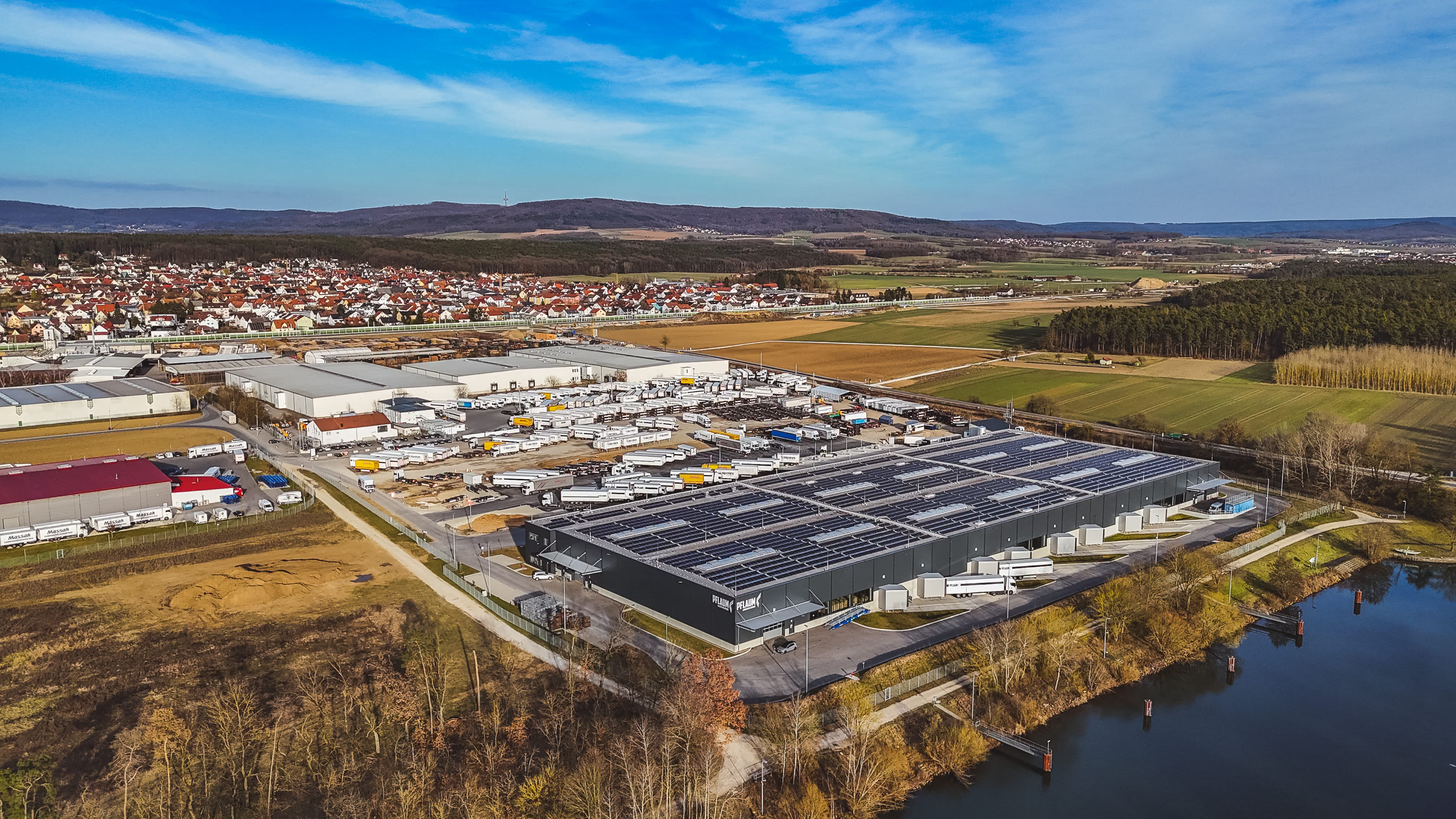
Pflaum is a family-owned logistics service provider based in Germany that specializes in full truckload (FTL) transport, food distribution, and special transports for industries like foam and industrial goods. Founded in 1980, it has grown to employ 1,850 people and operates a fleet of over 1,000 towing units, serving major retail chains with fresh, frozen, multi-temperature, and dry goods. Certified under ISO 9001 and 14001, Pflaum focuses on sustainable practices, including alternative fuels like Bio-LNG, Bio-CNG, and HVO100.


Read similar stories

Book & Claim at Scale: How Marken Turned Supplier Partnerships into Verified Emission Reductions

From Annual Reporting to Operational Carbon Accounting: How Lorenz Drives Emissions Intelligence