

20 Transport Management Systems, one source of truth: How Hellmann achieves consistent emissions transparency
Together with shipzero, Hellmann harmonized data from around 20 Transport Management Systems (TMS). The result: a consistent, high-quality data foundation for the annual Company Carbon Footprint (CCF) and monthly updates – providing the basis for well-informed decisions on the path to net-zero.
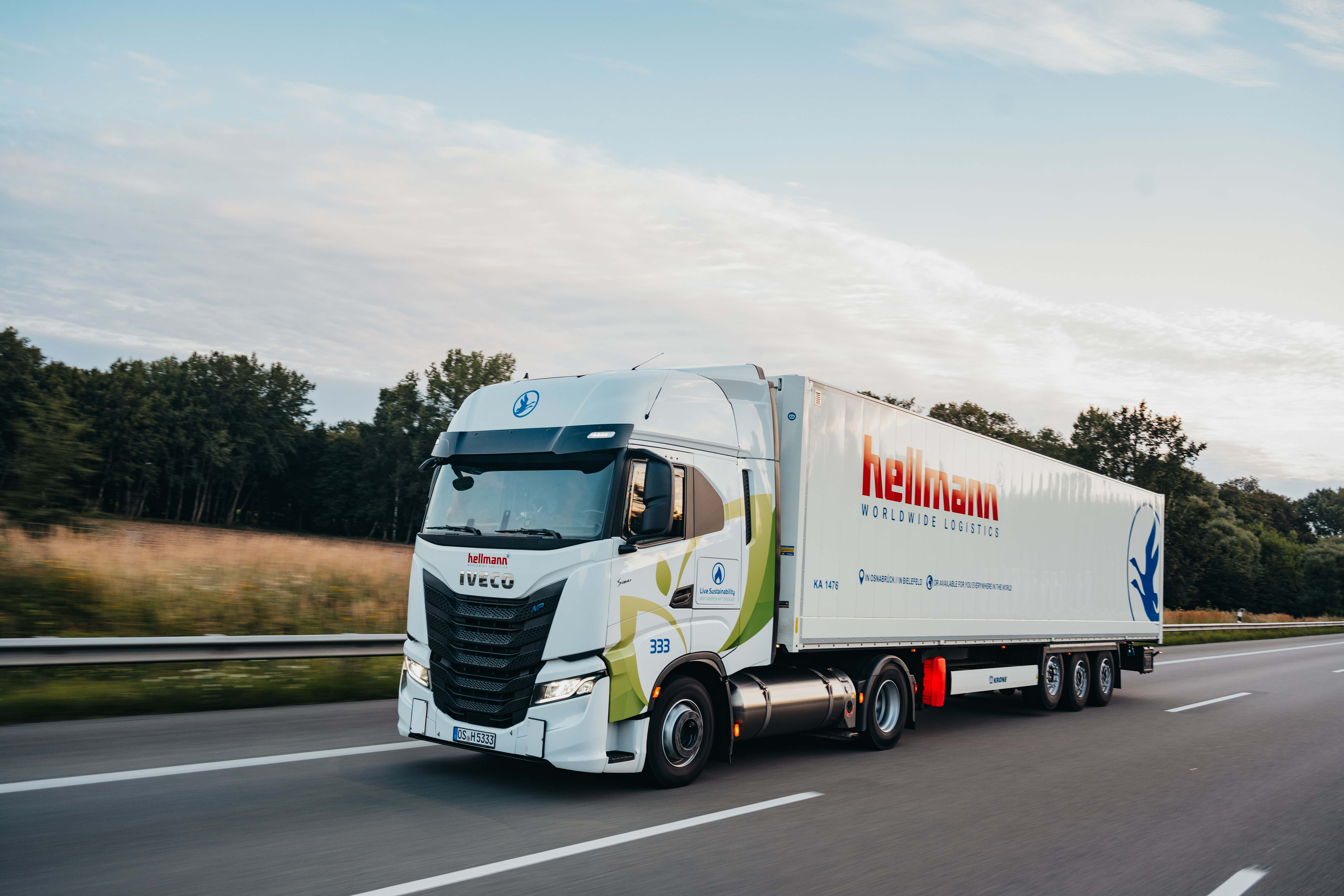
Summary
Sustainability has been a central pillar of Hellmann's corporate strategy since 2023. Through its commitment to the Science Based Targets initiative (SBTi), Hellmann laid the groundwork for making emissions measurable and managing reduction pathways with confidence. This transparency also carries strategic weight: Hellmann has set ambitious sustainability targets.
Working with shipzero, Hellmann established a unified data foundation across around 20 TMS – a critical basis for its Road, Rail, and CEP (Courier, Express & Parcel Services) business unit to produce a meaningful annual CCF. The standardized data is now updated regularly, enabling individual customer reports as well as management and board-level overviews.


Hellmann’s highly fragmented TMS landscape made it impossible to gain a consolidated, company‑wide view of emissions across Road, Rail, and CEP. Different systems, formats, and hard‑to‑trace handoffs turned clean aggregation and double‑count avoidance into a persistent bottleneck.

Together with shipzero, Hellmann implemented standardized Data Ingestion across around 20 TMS systems, with a common data model, mapping, and documentation blueprint for each source system. shipzero also introduced systematic data quality checks and aligned fields with emissions accounting standards.
Challenge: A fragmented TMS landscape as a barrier to transparency
Hellmann has been calculating emissions for customers for several years – but largely manually or semi-automatically, and mostly at the level of individual TMS systems. As soon as a customer was served across multiple countries, segments, or product types, multiple parallel reports emerged, sometimes with different time windows and inconsistent overviews. A consolidated, company-wide view of Road, Rail, and CEP was missing.
The root cause: the sheer variety of TMS systems in use. Different systems were deployed depending on the transport mode and even within sub-products (e.g., Full Truck Load vs. Less-than-Truckload). Compounding the issue were handoffs between systems that were difficult to trace without a global shipment ID, making clean aggregation and avoiding double-counting a persistent bottleneck.
"The calculation itself isn't the hardest part. The real challenge is the data foundation – getting data from different TMS systems standardized enough to be comparable and usable."
Solution: Standardized Data Ingestion as the Quality Foundation
Hellmann deliberately chose shipzero as a quality-focused partner to reduce complexity and protect internal resources. shipzero contributed expertise in two critical dimensions: first, processing large volumes of heterogeneous data (data pipeline, mapping, aggregation); and second, the methodological know-how for emissions accounting according to international standards such as ISO 14083 and the GLEC Framework.
The core of the approach was a standardized setup and documentation process for each connected TMS. shipzero captured export structures, systematically documented individual data formats and table structures, and defined unified target fields that were mapped for each system.
shipzero also identified additional levers for improving data quality – for example, which fields (such as vehicle class, fuel type, emissions standard, and FTL/LTL classification) could be usefully added as mandatory fields in source systems to make calculations even more precise.
shipzero acted as a bridge between IT data structures and the requirements of emissions accounting, working closely with around 25 contacts on the Hellmann side.
"The collaboration is excellent: shipzero operates pragmatically, solution-oriented, and with deep expertise. And they give us very honest feedback on where we can improve our data quality."
Results: Over 95% coverage and a new management foundation
With standardized data aggregation from around 20 TMS, Hellmann now captures more than 95% of relevant shipments in the Road, Rail, and CEP segment in its calculations. This provides a fundamental basis for managing and reducing Scope 3 emissions, as well as for the annual CCF. Individual customer reports and management overviews can now be produced consistently and comparably – across systems, countries, and product lines.
The project also surfaced previously unnoticed data handoffs between countries and segments. Through cleansing and standardization, comparability across systems was significantly improved. The long-term vision of a global shipment ID remains a goal that Hellmann continues to pursue.
An additional benefit: standardization makes data easier to share, including within partner networks (e.g., NG.Network) – even as specific exchange formats are still being defined jointly.
"Without the new data foundation, we couldn't have produced the CCF for Road, Rail, and CEP at this level of quality – and we wouldn't have had a genuine, meaningful metric to work with."
Outlook: Internalizing data analytics and scaling Book & Claim
In the next phase, Hellmann aims to embed the data standards established by shipzero more deeply into its own IT systems and regain greater independence in data analysis. In parallel, the number of TMS is expected to be reduced over time to lower complexity and further improve comparability. Additional data points in source systems will help make modeled calculations increasingly precise.
Hellmann is also rolling out Book & Claim together with shipzero. Initial customers have already expressed interest. shipzero supports Hellmann with specific expertise and platform capabilities, based on its independently validated approach certified by independent environmental auditors.
"We want to integrate the standards shipzero has built for us more deeply into our own systems – and at the same time use the foundation to offer new products like Book & Claim at scale."
Learn more about how shipzero's Data Ingestion and Company Carbon Footprint solutions work for logistics service providers.
Founded in 1871, Hellmann has grown into one of the world's leading international logistics providers. With services spanning Airfreight, Seafreight, Road, Rail & CEP, and Contract Logistics, the company offers tailored solutions for the complex logistics needs of its customers. Hellmann operates at around 250 locations in more than 60 countries and generated revenue of €3.8 billion in 2024.


Read similar stories
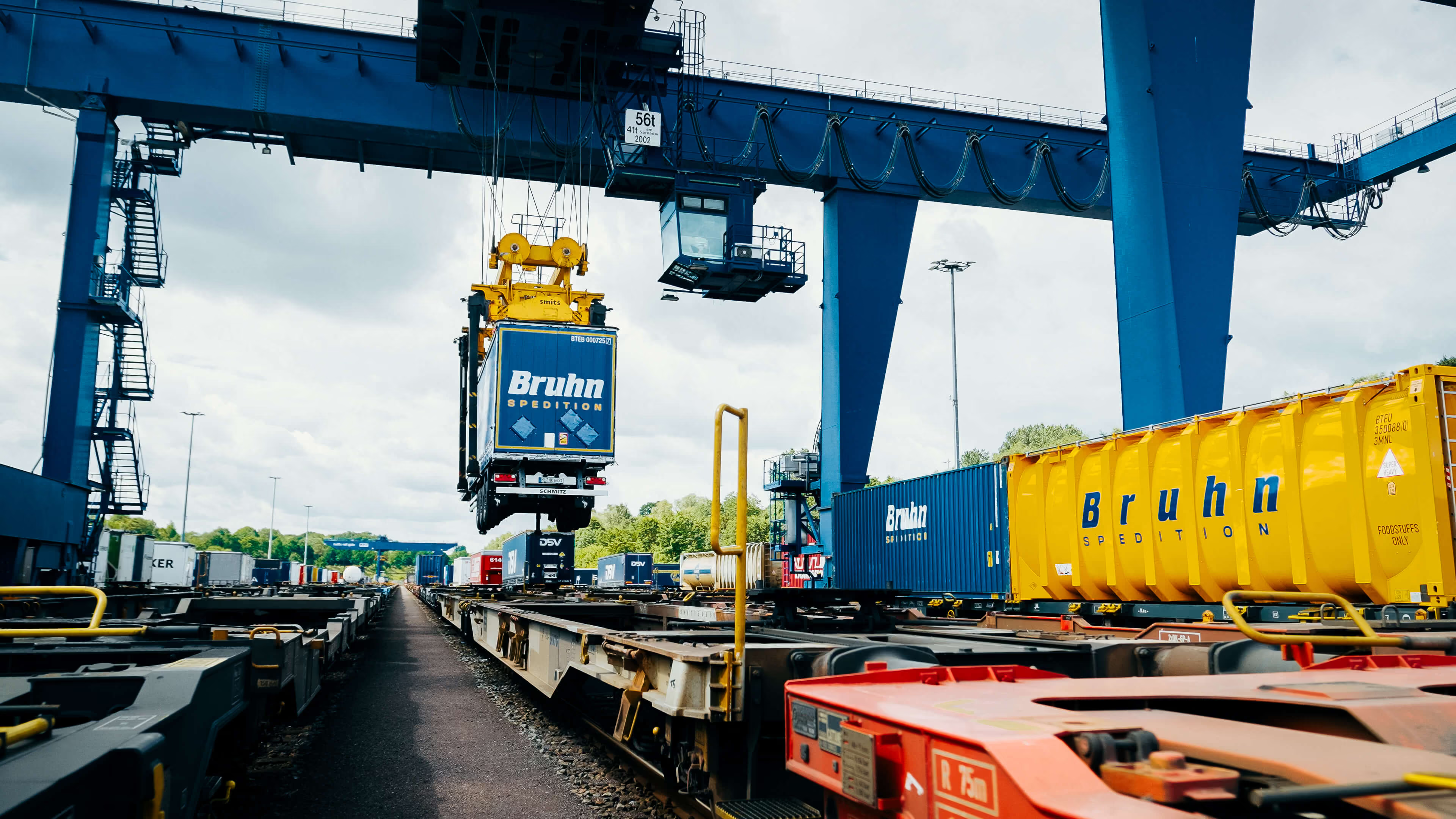


How Bruhn Used SQAS to Build Emissions Management on Data It Already Had
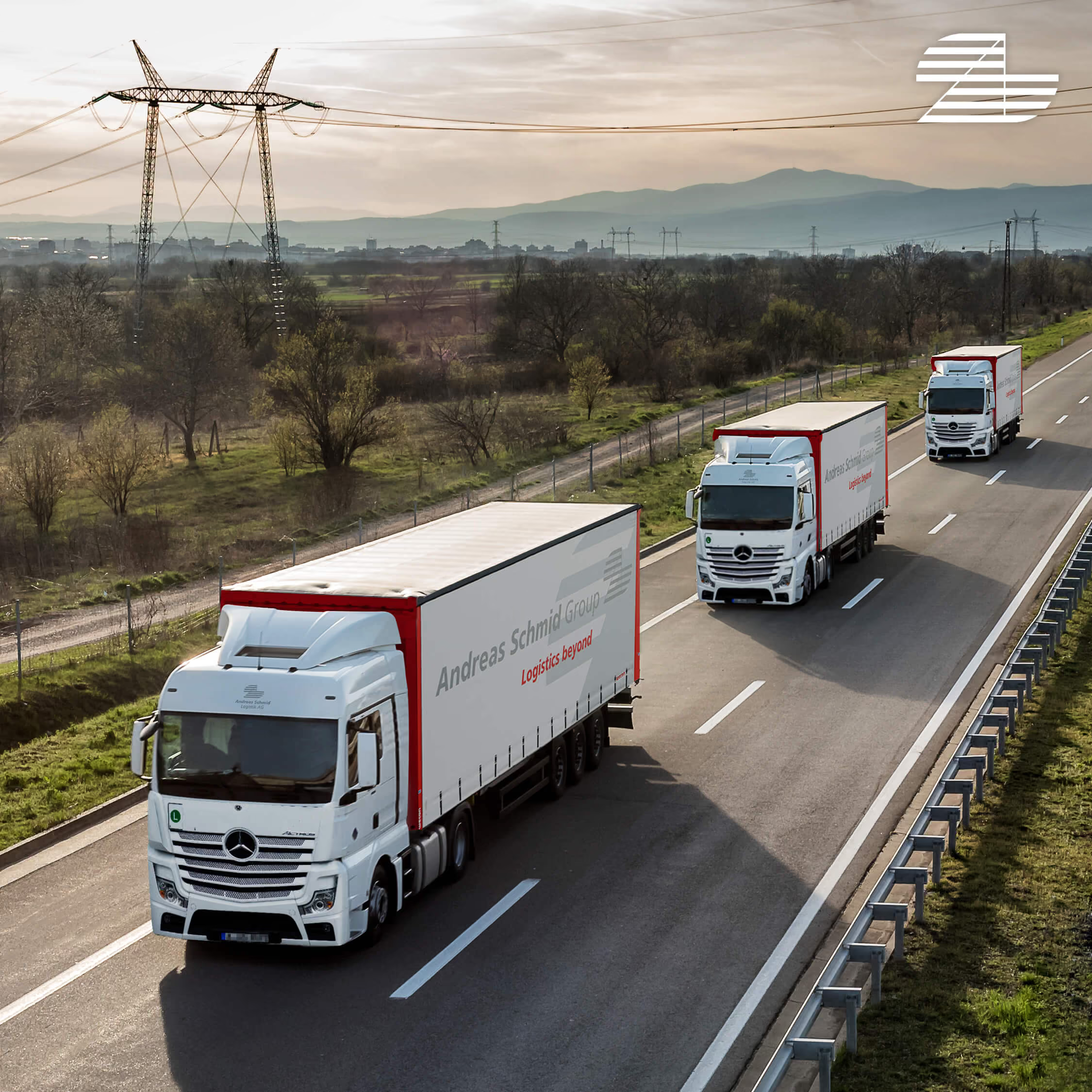
Calculating Shipment-Level Emissions Across a Complex Groupage Network
.jpg)